

Multi-Wallet Balance Checker: Every Wallet, Four Chains, One Dashboard

One saved list of wallets. Four chains, checked on demand.
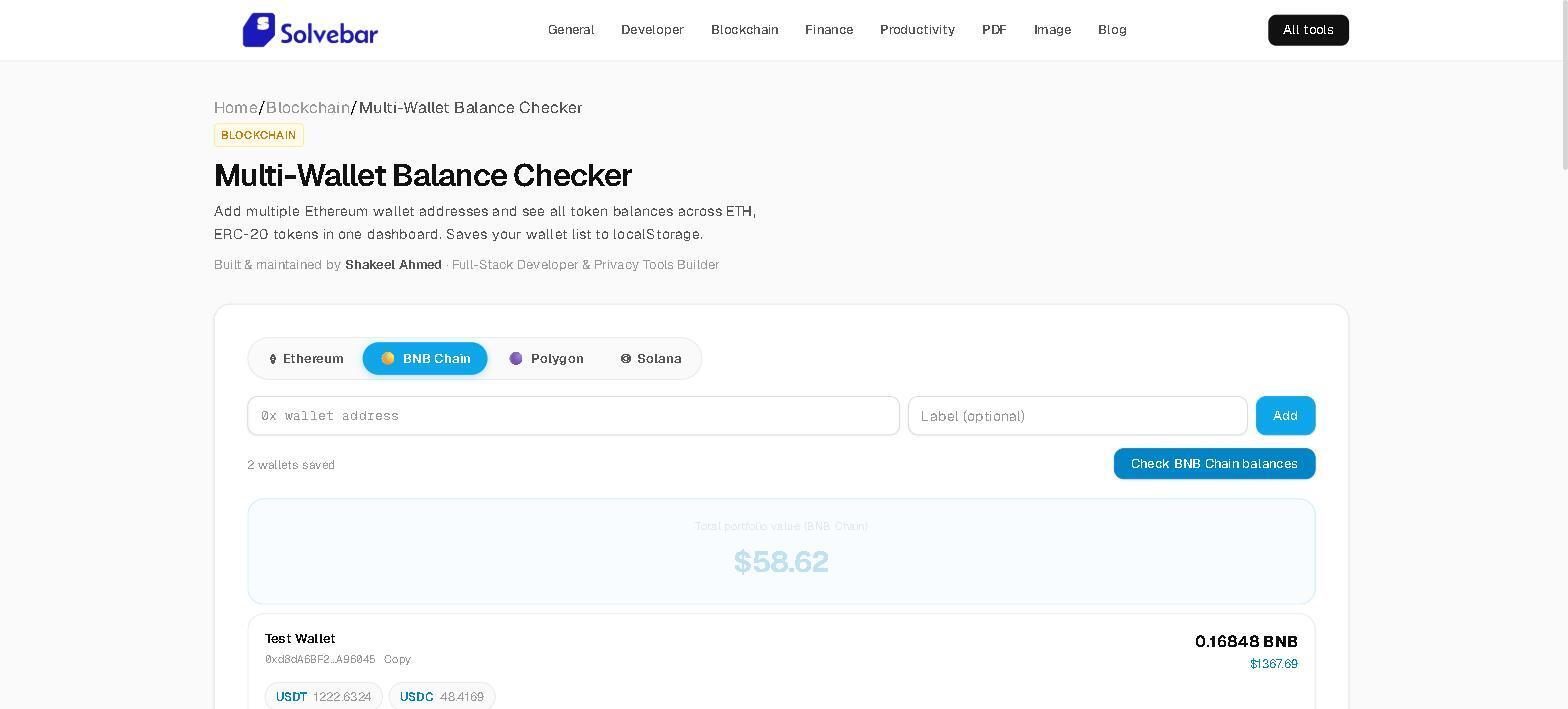
Add a wallet address once — an ETH address, a label, done. It's saved to your browser's local storage, and it stays chain-agnostic: switch the chain tab at the top between Ethereum, BNB Chain, Polygon, and Solana, and the same saved list gets re-checked against whichever network is active. Since Ethereum, BNB Chain, and Polygon are all EVM-compatible, the exact same 0x... address works on all three without re-adding anything — only Solana needs its own base58 address format, validated automatically when you add it.
Click "Check balances" and each saved wallet is queried directly against a public RPC endpoint for that chain — no proxy, no paid API key required, no rate-limited backend to wait on.
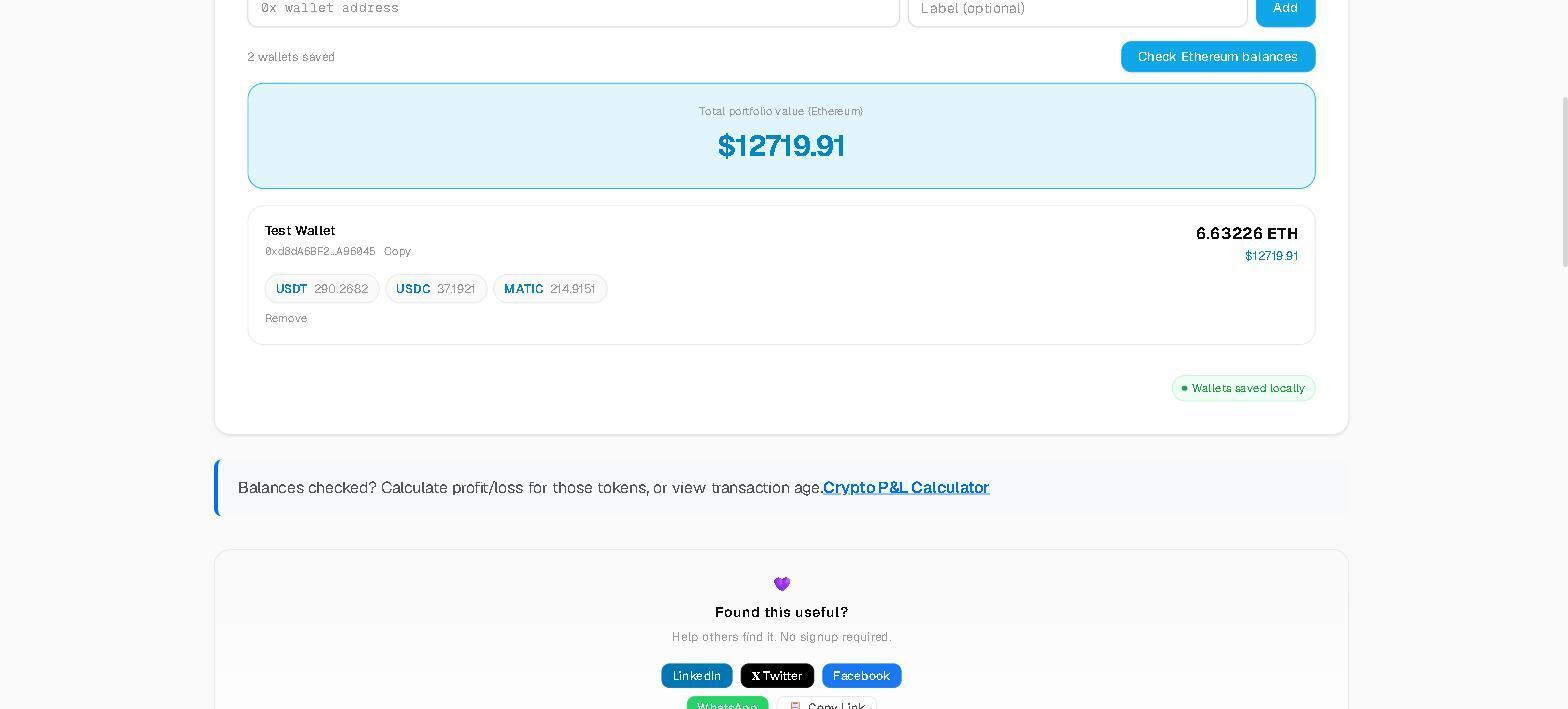
Real balances, animated in, not a wall of numbers
Each wallet's result card fades and slides in as its balance resolves, showing the native coin balance and any common tokens held (USDT, USDC, and other major tokens per chain) as pill-shaped badges with amounts. The total portfolio value across every saved wallet counts up smoothly to its final USD figure instead of just appearing — small detail, but it makes checking a dozen wallets feel a lot less like staring at a spreadsheet.
Prices come from CoinGecko's public price endpoint, matched against whatever coins actually come back from each wallet, so the total is a real sum across every token found — not just the native coin.
Built for checking, not custody
This is a read-only balance checker — there's no wallet connection, no signing, no way for it to move funds even if it wanted to. You're just querying public on-chain data through public infrastructure, the same data anyone could look up on a block explorer, just aggregated across every wallet and chain you care about in one screen. Your saved list persists across visits (still just local storage, still just on your device), so checking a batch of wallets is a repeatable one-click action, not a re-typing exercise every time.


